
Ronald Kleinknecht Excellence in Teaching Award
The Ronald Kleinknecht Excellence in Teaching Award is presented annually to one instructor or visiting faculty member from the College of Humanities and Social Sciences who has made outstanding contributions to teaching at WWU. The award was established by Ronald A. Kleinknecht, the founding dean of the College of Humanities and Social Sciences.
Selection Criteria
The following criteria and policies are meant to secure comprehensive evaluation and maintain goodwill in the process.
- No person will receive this award more than once.
- Only the name of the winner of the award will be announced on completion of the process.
- The candidate must be an instructor or visiting faculty member in the College.
- Nominees will be asked if they wish to be candidates and, if so, required to submit materials to the committee.
- The award is a teaching award, not a research award; materials submitted should speak to teaching.
- To secure consistency in the evaluation process:
- Supporting materials from the candidate will be limited to no more than three years. Student evaluations should be representative of courses taught within three years of teaching at Western. The candidate should provide copies of syllabi, reading lists, writing assignments, final exams, and any related materials used in the courses; more is not necessarily better in these materials.
- The candidate will supply the committee with two letters of support from students and two letters of support from faculty members, based on observation of the candidate’s teaching.
- The candidate will provide a current vita.
The candidate may provide up to two pages describing aspects of his/her teaching that may not be covered by the requested materials.
Award/Recognition
Award Adminstration
Nomination Process
Nominations for the 2024 award are now CLOSED. Thank you to those that took the time to nomination someone!
2024
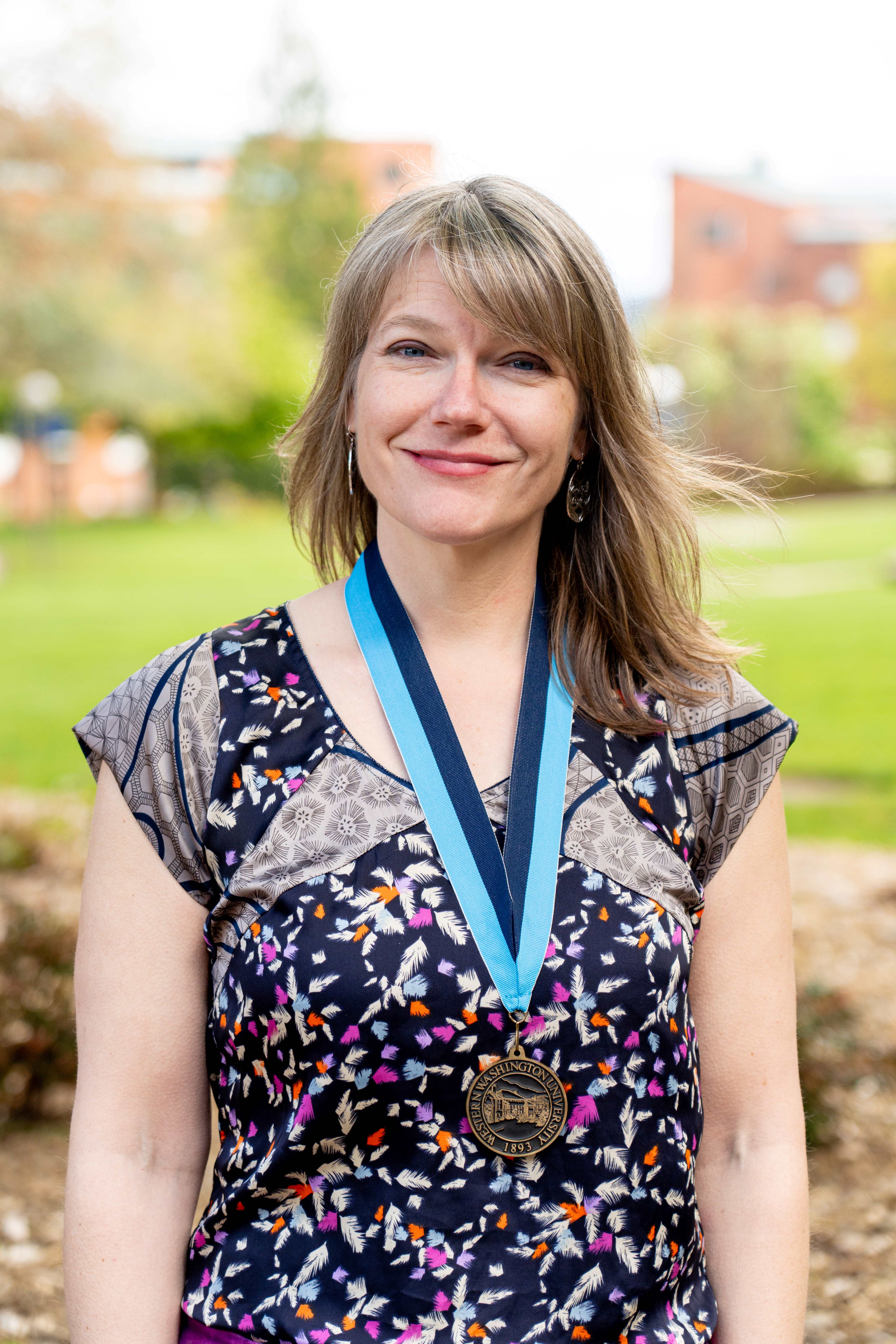
Mary Erickson - Communication Studies
Mary P. Erickson has taught at Western since 2015 and is a senior instructor in Communication Studies, as well as affiliated faculty with Women, Gender & Sexuality Studies and the Department of Theatre and Dance. Her courses have included media studies, cultures of social media, gender and technology, slow media, and dance in popular culture, among others. She also teaches seminars for the Honors College, including an upcoming course on the cultural meanings of celebrity.
Mary's research focuses on regional and independent screen media, media technologies, gender and media, and historical industrial concerns. She is editing “The Slow Media Life: Sensibility, Process, Technology,” a book about approaching the use of media in intentional and conscious ways. She has also co-edited several other books about film and television, and she spent a number of years working in independent film as a publicist, researcher and distribution consultant.
As a critical media scholar, Mary is committed to conveying the vital cultural importance of media in people’s lives, as well as the ways that we use media and technology to disconnect ourselves from our communities; she promotes critical media literacy as arguably one of the most important components of contemporary knowledge.
Past Awardees
1 awardee(s) for this year
2023 Awardees
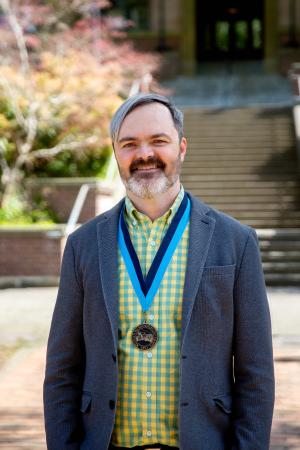
Daniel Chard - History
Historian Daniel S. Chard has taught at Western since 2019 and is the author of “Nixon’s War at Home: The FBI, Leftist Guerrillas, and the Origins of Counterterrorism” (University of North Carolina Press, 2021) and other publications. A visiting assistant professor of history, his courses for the History Department include America since 1865, History of the Pacific Northwest, U.S. in the Cold War, U.S. and International Terrorism, and Violence in America Since 1941, and he has taught seminars for the Honors College including an interdisciplinary history course, The American Right. Chard enjoys making research a central component of his courses, empowering students to develop skills and knowledge while pursuing their personal interests and career goals.
Currently, Chard is collaborating with a colleague at Whatcom Community College and members of the Lummi Nation Cultural Commission to develop an open-source lesson plan on the history, present, and future of the Lummi Indian Aquaculture Project established in the late 1960s and early 1970s. Working with Lummi elders has reinforced Chard’s commitment to defending tribal sovereignty and the environment, and informs his approach to teaching, which values students as whole people learning and growing in relationship with others, inside and outside of the classroom.